Showing posts with label maternal health. Show all posts

Wednesday, 23 May 2012

SPUC hosts Maternal Health Conference

On 20 March, Bristol Students for Life’s outgoing President, Eve Farren, and outgoing Publicity Officer, Rhoslyn Thomas, attended the Society for the Protection of Unborn Children’s (SPUC) Maternal Health conference in Oxford Street, central London. BSFL (Bristol Students For Life) attended hoping to learn more about the challenges that mothers and babies face in countries around the world, where these challenges are most common and what is being done to tackle them: Eve and Rhoslyn were not disappointed. The conference was well attended: a range of people including medical professionals, bioethicists, religious figures, students from other universities and concerned members of the general pro-life community were there and the conference featured an excellent line-up of speakers. 

The first speaker was to be the much loved and respected pro-life Feminist and supporter of BSFL, Fiorella Nash. Unfortunately, Mrs Nash was unwell that day and could not attend, but her excellent talk was read out nevertheless. Mrs Nash spoke of her experience of superb maternal healthcare in the UK, which literally saved her life, as well as that of her son who was delivered by caesarean section following a lengthy obstructed labour. She lamented the poor and often non-existent level of maternal healthcare which is present in many countries, a reprehensible state of affairs given that all the equipment and knowledge already exists to prevent maternal deaths. Staff at a hospital in Sierra Leone, she said, for want of a footbridge during the rainy season, were unable to help as they watched women die on the other side of the river. An argument often used by pro-abortion groups is that if only there was more abortion, there would be fewer maternal deaths. Mrs Nash, however, pointed out that Ireland an d Malta, where abortion is illegal, are two of the safest countries in the world for a woman to give birth. A coincidence? 

Also speaking at the conference was Dr. Roger Kiska, senior legal counsel of the Alliance Defense Fund (ADF). Dr. Kiska, who works in Vienna, spoke of the legal battle against the establishment of a ‘right’ to abortion in international law. At present, no such right exists and no UN treaty makes abortion an international human right. However, there is increasing pressure from the UN on countries to legalise abortion and to make it a ‘right’, including UN compliance body meetings to decide on ‘punishments’ for those countries who are still in defiance of the pro-abortion position. Steps are being taken by many pro-life legal figures to block these bullying tactics, as can be seen in the San Jose Articles (www.sanjosearticles.com). These articles are an aid in combating the increasingly accepted assertion that abortion is a human right. They state first and foremost that, “[a]s a matter of scientific fact a new human life begins at conception”.  According to their website, “The San Jose articles were created to help governments and civil society promote human rights through a proper understanding of how the right of the unborn child are protected in international law. The articles should be used to counter false assertions, such as the erroneous notion that abortion is a human right”.

The next speaker was Professor Robert Walley, a leading obstetrician. He was given the ultimatum of changing his speciality or leaving the field of medicine altogether during the 1970s following the legalisation of abortion in Great Britain. As Professor Walley pointed out, “Medics must live according to their consciences, which tells them not to perform abortions. Medics are trained to save life not destroy it." 
Professor Walley later went on to found Matercare International which runs a  much-needed programme in Kenya. It brings healthcare to mothers living in rural areas, often hours away from hospitals with nothing but dusty tracks to travel on. He gave a sobering account of the state of maternal healthcare in the countries where Matercare currently works: “In the countries in which I work, one in seven mothers will die due to lack of medical equipment...It is ridiculous to supply women with abortion and condoms when they need access to emergency obstetrical care...Abortion is a sin of commission, but failing to provide mothers with obstetrical care is a sin of omission", he said. "We are here to uphold women's dignity".

After a hearty lunch, the conference heard from Terry Brown, a representative of the Society of St. Vincent de Paul (SVP), a parish based group that works to support women in Sudan amongst other countries through the building of water wells, children’s homes, feeding clinics, medical treatment and many other things. For the SVP and for pro-lifers in general, being pro-life and being pro-woman go hand in hand. 

Last but not least was the fantastic Dr Obielumani Ideh, an obstetrician and researcher from Nigeria. Dr. Ideh expressed her frustration at the poor level of healthcare available to the vast majority of Nigerian women. In fact, the Nigerian Maternal Mortality Rate (MMR) makes up 10.7% of the global MMR of which 33.9% is due to haemorrhage. However, instead of money being pumped into services to help women who are in desperate need of basic equipment, medical staff and – in many cases – just a clean room, abortions are being illegally carried out by international organisations such as IPAS, which has been a presence in Nigeria for 20 years and whose director has been lobbying the president to legalise abortion. IPAS work in Nigeria under the guise that they are providing ‘after abortion care’. How, if IPAS abides by the law, is ‘post-abortion care’ taking place with no abortions? In addition, Dr. Ideh revealed that a department of the British government, the Department For International Development (DFID), has pledged £10 million to IPAS from 2008 to 2015. Dr. Ideh pointed out that this money could go a long way to helping the many women who are in desperate need. It can cost as little as £26 to look after a woman during childbirth in Nigeria, so just £3.4 million could pay for 30,000 patients. At this point, no doubt many in the audience were wondering when the widespread killing of unborn children will end and the rights of women and babies to clean, safe and widely available healthcare will begin. 

The SPUC Maternal Health conference was an indisputable success and set the benchmark for all future maternal health conferences, which BSFL hope SPUC will continue to host. However, finding speakers who are more involved, more passionate and themselves more committed to the improvement of maternal health will be a difficult task indeed! 

This post originally appeared on the Bristol Students For Life blog 

Tuesday, 3 April 2012

Department for International Development in bed with the porn industry

My last post drew attention to the Department for International Development (DFID) and its latest project to promote abortion and contraception in the developing world, via its buddies Marie Stopes International (MSI) and International Projects Assistance Services (Ipas). The project is called Preventing Maternal Deaths from Unwanted Pregnancy (PMDUP). Reading through the business plan revealed the following: 

The PMDUP CEO Coordination Group:

This will be led by MSI, and include the CEOs of Ipas and DKT. The CEO Coordination Group will:
  • Oversee the efficient management of the programme by ensuring that strong supervisory and management systems are in place as well as reviewing yearly and six-monthly reports.
  • Ensure appropriate engagement with the evaluation team.
  • Provide leadership for good functioning of the partnership by inspiring and requiring programme innovation, communications and results, strong synergies and economies of scale and VFM.
  • Provide oversight to ensure that technical quality is monitored and standards adhered to.
  • Serve as a senior communications channel within the consortium and externally for dissemination of learning and evidence-based practices.

This is just another example of what has already been pointed out: the very wealthy and very large abortion organisations are running the show for themselves, obviously using our taxes to fund their ideology against the poor and the unborn. There is something else to note - the involvement of DKT International (named after D. K. Tyagi, who saturated India with contraception during the sixties using mass media).

Tim Black and Philip Harvey (pictured left) met at the University of North Carolina, when the two were pursuing post-graduate studies in family planning. Black and Harvey shared a common ideology, and quickly became best friends. Their first joint venture in the sexual revolution was a mail-order condom business - illegal at the time. Black went on to found MSI, which proudly stated at a 2007 conference "we do illegal abortions all over the world". One of the 5 appointed trustees of MSI is a man named Philip Harvey - Black giving his best bud a pat on the back. Harvey went on to found Population Services International (PSI) - abortion and contraceptive devices being its reason for being. Harvey abandoned PSI soon after founding it, for pastures new.

Harvey went on to found and continues as CEO of Adam & Eve, rated America’s biggest mail-order and online retailer of condoms,  pornographic films, and 18,000 other items of porn paraphernalia – with annual sales of $100 million dollars. 25% - that’s $25 million dollars - goes towards Harvey’s other business called DKT International, the same DKT that will sit on the British government's PMDUP coordination group. What does DKT do? Here are some facts from from their website:

  • In 2011 DKT sold over a half-billion condoms, almost 70 million cycles of oral contraceptives, 12 million injectable contraceptives, 800,000 IUDs, over 10 million misoprostol pills, and 800,000 medical abortion packs, as well as emergency contraception, hormonal implants, and manual vacuum aspiration kits
  • In Mozambique, Ethiopia, and India, DKT is making manual vacuum aspiration kits and chemical abortion drugs increasingly available to rural and hard-to-reach consumers.  
  • DKT was the first organisation in India to run adverts on national television about medical abortion. You can see these advertisements on YouTube
  • More than 40,000 midwives have been trained in IUD and implant insertion and removal in Indonesia
  • In the Philippines and Ethiopia, DKT provides an estimated 50 percent of all modern family planning methods
  • DKT is the largest private provider of contraceptives and family planning services in the developing world...

...All in large part funded by the pornographic business Harvey has run since 1971, and now DKT will help manage the British government's campaign against families, mothers, and unborn children in poor countries throughout the world. Put simply, DFID are in bed with porn barons and death peddlers.


Monday, 26 March 2012

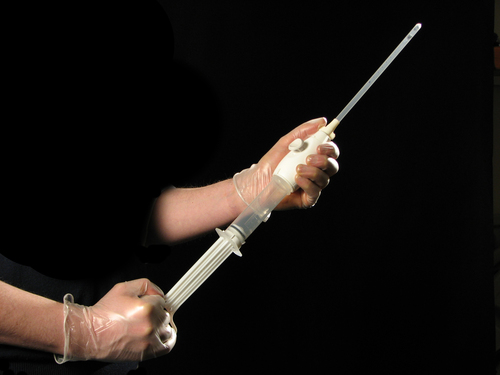
The British government thinks a manual vacuum aspirator in the hands of an abortionist counts as development aid for mothers

SPUC recently held a very successful conference in London on the topic of abortion and maternal health in the developing world. You can read a full report with photos on the SPUC website. SPUC also has a briefing on these issues, and the texts of the presentations will be available shortly.

One of the key issues looked at was the funding given for promoting and doing abortions in the developing world. The Department for International Development (DFID) gives hundreds of millions to organisations like International Planned Parenthood Federation (IPPF), Marie Stopes International (MSI) and  International Projects Assistance Services (Ipas) who specialise in killing unborn children. This funding usually takes the form of a  Partnership Programme Arrangement (PPA) which lasts several years, but funding for individual and country-specific programmes can also be given under initiatives like the Civil Society Challenge Fund (CSCF).

The latest project launched by DFID is called Preventing Maternal Deaths from Unwanted Pregnancy (PMDUP). DFID will give £67 million pounds over 5 years from July 2011 to June 2016 via MSI and Ipas, to carry out and promote abortion and contraception in 14 countries: Afghanistan, Bangladesh, India, Myanmar, Pakistan, DRC, Ethiopia, Ghana, Malawi, Nigeria, Sierra Leone, Sudan, Zambia, and Zimbabwe. In its Business Plan (2011 – 2015) DFID committed ‘to embed in every relevant bilateral programme specific plans to take forward the promotion of choice for women over whether and when they have children’ - i.e. DFID will make sure abortion and contraception are part and parcel of any funding and aid they offer, as far as possible. 

Reading through the PMDUP business plan reveals that MSI and Ipas will be responsible for collecting the programme data, and Options - the consultancy firm wholly owned by MSI - will provide consultancy for the PMDUP programme and be linked to the impact evaluation. Options will also be involved in providing evidence to shape PMDUP implementation strategy. Not only is DFID leading the way in killing unborn children in the developing world, they are getting the abortion organisations to collect the programme data for the programmes they themselves will be carrying out, provide consultancy to DFID, and influence the impact evaluation of the programme they have been asked to do.

To use an analogy, it's a bit like a firm making landmines being given tens of millions to make and plant landmines in the developing world, and allowing that same firm making the landmines to collect data on the impact of landmines, advise the government on the safety and effectiveness of their programme to promote landmines, and then allowing the firm to evaluate themselves. The mind boggles. 

Some charts are provided in the business plan about "growth forecast" for the PMDUP programme. The 2 charts below detail the hoped for number of women having abortions and receiving contraceptive devices by MSI and Ipas. The second chart details the future increase in the number of MSI and Ipas facilities conducting abortions - usually using misoprostol or manual vacuum aspirators. 

For MSI 2,866,880 mothers are expected to undergo an abortion or post-abortion "care", and for Ipas the figure is 519,535. It's very probable that Options or MSI and Ipas themselves came up with these figures, considering how much of a free rein they have been given by DFID.

The term "post abortion care" (PAC) is deceptive. PAC is part and parcel of the abortion promotion agenda of organisations like IPPF, WHO, DFID, MSI, and Ipas who in 1993 together with IPPF founded the PAC Consortium. In 2007 pro-lifers and religious leaders rejected proposals by the Guatemalan Ministry of Health to introduce post-abortion care into public health, citing the reason that such measures are tactics to further the abortion agenda.

One of the uses of PAC is getting the abortion drug misoprostol into countries for post-abortion and incomplete abortion "services", as seen from the PAC Consortium misoprostol resources pages of their website. The devastating effect of misoprostol on a developing country has already been presented by Dr. Susan Yoshihara, following the 2010 Women Deliver Conference. Several years ago the World Health Organisation changed its policy to include misoprostol on its list of essential medicines. This move was supported by radical pro-abortion organisations such as Gynuity and MSI. This is noted by the pro-abortion Center for Reproductive Rights, and used as another prong to further abortion and avoid maternal morbidity and mortality.

PAC is a cover for introducing abortion into countries where it is illegal or highly restricted, as noted by Dr. Ideh at the SPUC maternal mortality conference. We have also seen this recently in the case of Rwanda. The radically pro-abortion Guttmacher Institute produced a study citing the lack of post-abortion care as a reason for abortion-related morbidity and lack of family planning, always discussed and offered following an abortion, as reasons for liberalising Rwanda's law on abortion. Guttmacher is supporting the lobbying efforts of Rwanda's IPPF affiliate in the country. PAC is a useful cover, as it allows abortion organisations to train people, from doctors to community health workers, to conduct abortions using MVA and misoprostol, and promote contraceptive devices, better know as post-abortion family planning. It also reinforces the canard of safe v unsafe abortion by claming that abortion is safe where post-abortion care for complications is easily available. PAC is part of a strategy which seeks to normalise abortion at the level of public opinion and medical consensus, and persuade legislators that a country's abortion laws need to be changed in favour of abortion.


What this chart above sets out is the increased number of abortion and contraception facilities that MSI and Ipas hope to establish by 2016. The total for MSI is 2563 and 1024 for Ipas.

These are desperate times for mothers, babies, and families in the developing world, where our taxes are being used to kill unborn children and harm the health of mothers. Money is being diverted away from the real causes of maternal morbidity and mortality, and instead being used to serve the ideological agenda of DFID and its partners IPPF, MSI, and Ipas. We now live in a world where the manual vacuum aspirator in the hands of an abortionist counts as aid to developing countries. 

"international aid for the poor"

Friday, 9 March 2012

World expert on maternal health Professor Robert Walley


Pictured (L to R): Paul Tully, Professor Robert Walley, and Fiorella Nash. Robert landed in London from Canada, enroute to Kenya. Robert stopped by our offices in London for a quick visit and lunch with Paul and Fiorella.

Robert is the founder and executive director of MaterCare International, and an emeritus Professor of Obstetrics and Gynaecology at Memorial University of Newfoundland. He is a Fellow of the Royal College of Physicians & Surgeons of Canada, a Fellow of the Royal College of Obstetricians & Gynaecologists of Canada, a Fellow of the Royal College of Obstetricians & Gynaecologists of England, and has a Masters degree in International Health from Harvard University.

Robert has done, and is doing, some amazing things to help mothers and babies all over the world. Check out the MaterCare website for examples of where they work and what they're doing. 

Robert and his team have just built a hospital especially for pregnant mothers and newborns in a remote part of Kenya. We wish Rob all the best, and look forward to his updates when he returns to speak in London.

We're very Lucky to have Robert as our headline speaker at our forthcoming conference "Abortion or Maternal Health: what should the British government be funding in developing countries?" Tuesday 20 march 2012, London. This is an event not to be missed. Get booking!

Wednesday, 15 February 2012

The Scandal of Maternal Mortality


I am ashamed to admit that I did not entirely appreciate how dangerous childbirth can be for both women and their babies until I became a mother myself. My eldest son, who is now five years old, would not be alive today if it were not for a skilled obstetrics team who delivered him by emergency caesarean, following a lengthy obstructed labour. My youngest child would not be alive today if it were not for skilled midwives and paediatricians who resuscitated him when he stopped breathing, and detected and treated his chest infection in a well-equipped Special Care Baby Unit, manned 24 hours a day by dedicated nurses. And I am aware that I would not be alive today to raise my children if I had not had access to excellent hospital facilities, nurses, midwives and doctors who were able to save my life when I developed complications during two out of three labours. I told somebody after my first baby was born that when, after nearly twenty-four hours of the worst agony I had ever experienced, an obstetrician entered the labour room, I felt as though I were being rescued from a torture chamber. Contrary to the opinions of some of my more acerbic critics, this was not my "fondness for hyperbole at work":  I was in fact demonstrating the great British art of understatement. The obstetrics team at the Rosie Maternity Hospital were not rescuing me from torture;  they were rescuing me and my baby from death sentences.

Here in the West I think we can all be in danger of complacency when it comes to maternal health. Mercifully, very few people reading this will know a woman who has died in childbirth and maternal mortality can feel rather like the stuff of Victorian horror stories. I remember everyone giggling during A-level English Literature classes over the number of nineteenth century novelists who introduced their heroines with the words ―her mother died in childbirth and left her an orphan and a beggar or over  the typical emotional outcry ―save the child! from the mouths of other worthy heroines. But even these Victorian melodramas should be stark reminders that not so long ago in our own history, everyone would have known some woman who had died in childbirth and the tragedy of maternal mortality – of women dying young, of children growing up orphans  – remains the reality in many countries of the world.  However, whereas in early nineteenth century Britain, there was little that could be done to save a woman facing complications such as sepsis or obstructed labour, there is no reason in 2012 why any woman should die during or as a result of giving birth.

That is the real tragedy. There is no inevitability here. Dr Robert Walley, director of the Canadian-based group of Catholic obstetricians and gynaecologists  MaterCare International describes maternal mortality rather more accurately as 'an international disgrace'.

Read more

Dr Walley will be speaking at SPUC's forthcoming conference on maternal mortality in developing countries and the pro-life response. This is a great opportunity to hear some of the world's bravest and most effective medics working in the toughest conditions in developing countries. Book now  for SPUC's "Abortion or maternal health?" conference, 20 March, The Regent Hall, London.

Related Posts Plugin for WordPress, Blogger...