Showing posts with label human dignity. Show all posts

Wednesday, 29 May 2013

Missionaries to society

On the 25 May 2012 The Daily Telegraph reported that the Home Secretary Teresa May said "homosexuals will be missionaries to the wider society and make it stronger." She made this comment in relation to government plans to legalise same-sex marriage. 

In the same vein pro-abortion voices say they defend abortion because they take motherhood so seriously. Similarly, self-described pro-choice advocates present abortion as a means of exercising free choice and ensuring women's equality. 

What we have is a moral inversion - bad is called good. That which causes harm is called enhancing. 

What our society continually and urgently needs is for pro-lifers, those who believe in the dignity of the human person from conception, and the institution of heterosexual marriage as best for children born and unborn, to be missionaries to the wider society, and make it stronger. We can and should go to talks and conferences, read articles, and learn the arguments, but if we do not take the message to others we are not being effective. We end up creating a pro-life cottage industry where we talk to ourselves about what we already know and agree upon.

Pope Francis, in 2005 whilst still a cardinal in Argentina, gave a sermon to a group of pro-lifers. His sermon included the following message. Although it will have obvious relevance for Christians, especially Catholics, it's useful for us all in appreciating the spirit we need in order to be missionaries to the wider society:
But it is a road that is full of wolves, and perhaps for that reason they might bring us to the courts, perhaps, for that reason, for caring for life they might kill us.  We should think about the Christian martyrs.  They killed them for preaching this Gospel of life, this Gospel that Jesus brought.  But Jesus gives us the strength.  Go forth!  Don't be fools, remember, a Christian doesn't have the luxury of being foolish, I'm not going to repeat, an idiot, a fool, he can't give himself the luxury.  He has to be clever, he has to be astute, to carry this out.
Society, unborn children and their parents, need you to be a missionary right where you live - whether village, town or city. Taking the pro-life message to the public - leafleting, table displays, prayer vigils, pro-life chains, walks of witness, supporting pro-life pregnancy centres, writing letters to local and national press, calling into radio shows, objecting to BPAS and Marie Stopes abortion adverts in pub and club toilets etc etc - not only brings the message to a wider audience, but also strengthens our resolve to be actively pro-life.

Fr (Blessed) Miguel Pro, Mexican martyr 1927
White Rose movement - student resistance to Nazi atrocities
Greensboro Woolworth restaurant sit-ins 1960


Pakistani politician Shahbaz Bhatti murdered for opposing oppressive sharia laws
Pro-life street display table
Large pro-life prayer vigil
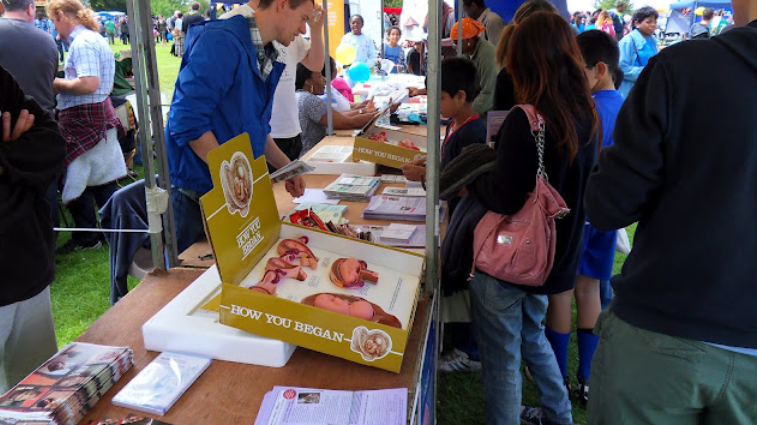
Pro-life display table at a local council festival


SPUC's Anthony Ozimic explaining the nature of marriage on national television

 Young adults March for marriage in Paris
Pro-life tour with the Olympic torch
Post-abortive mothers public witness
Email your name, address, and number of pro-life leaflets you want: danielblackman@spuc.org.uk

Tuesday, 15 May 2012

Sir Francis Galton: the father of Eugenics


Sir Francis Galton 1822 - 1911
The term ‘eugenics’, literally meaning ‘well-born’, was coined by Sir Francis Galton, who may be considered the ‘father of eugenics’ as he laid the intellectual foundations of the movement and placed his considerable prestige and influence behind practical efforts to further it. 

Francis Galton was born on the 16th February 1822 in Birmingham. He has often been described as a ‘child progidy’, learning to read and memorise long portions of the classics at a young age. It was decided that he should study medicine and consequently in 1838, aged sixteen, he took up residence as an ‘indoor pupil’ at Birmingham Central Hospital. He then studied medicine for one year at King’s College, London. In 1840 he continued his studies by reading Mathematics at Cambridge. He does not seem to have held any recognisably Christian beliefs; in fact he was later to argue that the improvement of mankind by eugenics ‘must be introduced into the national conscience, like a new religion'. And he saw ‘no impossibility in eugenics becoming a religious dogma among mankind.’[1] Perhaps this idea of the perfectibility of man without God owes its origin to his membership of the Scientific Lodge of the Freemasons which he joined early in 1844, becoming a Master Mason on 13th May the same year.[2] A central tenet of Freemasonry is a naturalism which pursues human ‘progress’ without any reference to God or supernatural grace and it would be very surprising if there were no connection between Galton’s ideas and his membership of the order. The year 1844 also saw the death of his father which left him an inheritance sufficiently large that he no longer needed to train for a profession. He spent the next few years travelling and on his return to Britain engaged in various scientific pursuits.

Charles Darwin 1809 - 1882
The publication of On the Origin of Species by his cousin Charles Darwin was one of the most important events of his scientific career. He wrote that it ‘made a marked epoch in my own mental development, as it did in that of human thought generally’ and that its effect was ‘to arouse a spirit of rebellion against all ancient authorities' whose teachings he thought were opposed to scientific facts.[3] However it is worth remembering that many of those things that Galton considered ‘facts’, such as the inferiority of the African races, have since been disputed or rejected all together. Galton began to apply Darwin’s theory to the study of variations among human beings and became convinced that mankind could and should be made the object of selective breeding, after the manner of animals, in order to increase the frequency of ‘superior’ qualities, such as intelligence.

There is nothing either in the history of domestic animals or in that of evolution to make us doubt that a race of sane men may be formed, who shall be as much superior mentally and morally to the modern European, as the modern European is to the lowest of the Negro races.[4]

Galton spent the rest of his life pursuing ‘race improvement’. One of his suggestions was that the Chinese should be encouraged to migrate to Africa to ‘out-breed and finally displace’ the ‘inferior Negro race’. He argued that ‘average negroes possess too little intellect, self-reliance, and self-control to make it possible for them to sustain the burden of any respectable form of civilization’ whereas ‘the Chinaman is a being of another kind, who is endowed with a remarkable aptitude for a high material civilization.’ Essentially he saw the Chinese as an evolutionary ‘competitor’ to the indigineous Africans. The elimination of the latter by outbreeding was a ‘gain’ which ‘would be immense to the whole civilized world’.[5] It was a small step, made in a few generations, from justifying the slow elimination of a ‘lesser race’ by outbreeding to justifying the speedier process of extermination by genocide.

Sir Francis Galton was concerned not only with the elimination of inferior races but also with the perfecting of white Europeans. Like many of his contemporaries he was convinced that the population of Britain was ‘degenerating’.[6] He wrote to the Times in 1909 to complain that ‘the bulk of the community is deteriorating’.[7] He divided the nation into three categories; a minority of ‘desirables’, a larger number of ‘passables’, and another minority of ‘undesirables.’[8] He advocated awarding diplomas to men and women of exceptional intellectual and physical qualities and then encouraging them to intermarry. He recommended that the wealthy seek out promising young persons among the poor for their patronage, suggesting that ‘it might well become… as much an avowed object of honour, for noble families to gather the best specimens of humanity around them, as it is to maintain fine breeds of cattle and so forth’.[9]

Galton complained that ‘a considerable part of the huge stream of British charity furthers, by indirect and unsuspected ways, the production and the support of the Unfit.’ Rather than being wasted on ‘harmful forms of charity’ resources should instead be directed to the ‘production and well-being of the Fit.’ He argued that ‘undesirables’ should still be cared for but insisted that ‘by means of isolation, or some less drastic yet adequate measure, a stop should be put on the production of families of children likely to include degenerates.’[10] In his work Eugenics: Its definition, scope and aims he expressed his belief that if ‘unsuitable marriages from the eugenic point of view were banned socially, or even regarded with the unreasonable disfavor which some attach to cousin-marriages, very few would be made.’[11]  

Sir Francis Galton was the primary originator of the ‘science’ of Eugenics but the movement he started soon spread. One of the first results was that numerous attempts were made to sterilise those deemed ‘undesirable’. A private members bill that would have legalised voluntary sterilisation was defeated in the House of Commons in 1931 but in the United States compulsory sterilisation was legalised in many states and upheld by the Supreme Court in 1927. In other US states laws were passed forbidding certain groups to marry. It is claimed that in Sweden between 30,000 – 62,000 ‘undesireables’ such as the mentally ill were sterilised under varying degrees of compulsion. The province of Alberta in Canada permitted the sterilisation of aboriginal girls in ‘native schools’ and eugenics has been seen as an important factor behind the policy of removing mixed race children from their aboriginal parents. In Australia it was thought that Aborigines would die out, if they were kept apart from whites, because of their evolutionary inferiority. Eugenic arguments were also deployed in Japan to promote forced sterilisation and then, in 1948, the legalisation of abortion.

The connection between eugenics and abortion is very clear. If one human being is considered of less worth than another, and if their existence is seen as a threat to the well-being of the race, then it follows logically that there will be those who wish to resolve the problem, often by more direct means that those advocated by Sir Francis Galton. Towards the end of his life Galton was praised by the Jewish Chronicle for his life spent ‘improving the fitness of the human race and striving to secure that children born into the world shall be well born in the sense that they shall not start life handicapped due to physical defects.’[12] The abortion industry, in its relentless war against unborn children with disabilities, has simply taken this position to its logical conclusion. 


[1] Francis Galton, ‘Eugenics: Its definition, scope and aims’, The American Journal of Sociology 11, (1905)  
[2] Papers held by the Galton Laboratory, University College London and the Library and Museum of Freemasonry, London.
[3] Francis Galton, Memories of my Life, (1908)
[4] Francis Galton, Hereditary Genius, (Preface to 1892 edition)
[5] Francis Galton, ‘Africa for the Chinese’, Letter published in the Times on 5th June 1873.
[6] Francis Galton, ‘Our national physique--prospects of the British race--are we degenerating?’, Daily Chronicle, 29th July 1903
[7] Francis Galton, 'Deterioration of the British Race', Letter published in the Times, 18th June 1909
[8] Francis Galton, ‘Address on Eugenics’, Westminster Gazette 26, (1908)
[9] Francis Galton, ‘The possible improvement of the human breed under the existing conditions of law and sentiment’, Nature 64, (1901)
[10] Galton, ‘Address on Eugenics’
[11] Galton, ‘Eugenics: Its definition, scope and aims’
[12] Introduction to an interview with Francis Galton in the Jewish Chronicle on 20th July 1910

Wednesday, 2 May 2012

Dr Halliday G. Sutherland and resistance to the birth control movement


“... the ordinary decent instincts of the poor are against these practices, and indeed they have used them less than any other class. But, owing to their poverty, lack of learning, and helplessness, the poor are the natural victims or those who wish to make experiments on their fellows. In the midst of London, a woman, who is a doctor of German philosophy (Munich) has opened a Birth Control Clinic where working women are instructed in a method of contraception described by Professor McIlroy as ‘the most harmful method of which I have had experience.’”


“It is truly amazing that this monstrous campaign of birth control should be tolerated by the Home Secretary. Charles Bradlaugh was condemned to jail for a less serious crime.”


For these words a renowned medical pioneer was prosecuted for libel by Marie Stopes in 1923.

Dr Halliday G. Sutherland (1888-1960)
Dr Halliday G. Sutherland stood up courageously against the birth control and eugenics movement in the early twentieth century and his life therefore deserves the attention of those of us who continue that battle today. He was born in Glasgow in 1882 and studied medicine at the University of Edinburgh, graduating in 1908. He began his career as a bacteriologist at Liverpool Chest Hospital before spending time practising medicine in Spain at a British medical clinic. On his return to Scotland he worked at various hospitals before becoming Medical Officer at St. Marylebone Tuberculosis Dispensary in London in 1911. When war broke out he joined the Royal Navy, and then the fledging Royal Air Force. After the war he returned to the practice of medicine becoming an expert in tuberculosis and holding many senior positions in that field. He was also a popular travel writer and adventurer writing books such as Lapland Journey, Spanish Journey, and A Time to Keep. His autobiography The Arches of the Years was published in eight European languages and reprinted thirty-five times.

Shortly after the First World War Sutherland was received into the Catholic Church. He dedicated a great deal of time and energy to exposing the incipient birth control movement publishing Birth Control: A Statement of Christian Doctrine against the Neo-Malthusians in 1922. He began this work by examining and refuting the doctrines of Malthus and the Neo-Malthusians concerning overpopulation. He argued that there was no evidence that the world was facing a crisis of overpopulation and then deconstructed the Malthusian narrative step by step. He argued that the real cause of poverty was economic injustice and not overpopulation. He then moved on to discuss the health risks of contraceptive methods, the degradation of women which was inseperable from their use, the damage that they caused to marriages and finally the way in which in birth control was used to control the poor. He ended the book by discussing the immorality of contraception in the light of the teaching of the Catholic Church.

The first trial of Halliday Sutherland took place in February 1923. Marie Stopes argued that the extracts quoted above were libellous because they alleged that she was taking advantage of the weakness of the poor, that she was subjecting them to dangerous experiments, and that she was guilty of criminal practices. She said that her reputation and that of her clinic had been unjustly damaged. Sutherland defended himself by arguing that his words were true and fair comment made in the public interest. The jury decided that the claims made by Sutherland about Stopes were accurate but that they had been made in a defamatory manner and awarded damages of £100 to Stopes. The judge rejected their verdict and Sutherland was aquitted. Stopes successfully appealed against this decision and £100 of damages were once more awarded to her. Sutherland then appealed to the House of Lords where the Law Lords reached a verdict 4-1 in his favour.

Lord Vincent concluded that Sutherland’s accusations were fair comment and a reasonable expression of the commonly held opinion that ‘such practices are revolting to the healthy instincts of human nature’. Indeed, Lord Vincent expressed his own opinion that works promoting methods of birth control ‘are calculated to have a most deplorable effect upon the young of both sexes’ and pointed out that Stopes’ works were ‘of such a nature that they were not read aloud’ in the court. The accuracy of Lord Vincent's prediction has become all too clear in our own day (see here and here for evidence of this).
  
The Stopes vs Sutherland trial ended with criticism of Marie Stopes being heard in the highest court in the land and with at least one of her allegations against Sutherland being dismissed as ‘absurd.’ The enormous costs that she was made to pay were a setback to her work. Unfortunately the courts would not long remain places where human dignity was upheld yet Sutherland can remain for us a model of courage and tenacity in defence of human life.

Dr Halliday G. Sutherland died in April 1960. He had been made Knight Commander of the Order of Isabella by the Spanish government in 1954 for his services to the Spanish people. In 1955 he was presented with the Pope John XXI medal, which is awarded to Catholic doctors who have made an outstanding contribution to the field of medical ethics.

Tuesday, 3 April 2012

Department for International Development in bed with the porn industry

My last post drew attention to the Department for International Development (DFID) and its latest project to promote abortion and contraception in the developing world, via its buddies Marie Stopes International (MSI) and International Projects Assistance Services (Ipas). The project is called Preventing Maternal Deaths from Unwanted Pregnancy (PMDUP). Reading through the business plan revealed the following: 

The PMDUP CEO Coordination Group:

This will be led by MSI, and include the CEOs of Ipas and DKT. The CEO Coordination Group will:
  • Oversee the efficient management of the programme by ensuring that strong supervisory and management systems are in place as well as reviewing yearly and six-monthly reports.
  • Ensure appropriate engagement with the evaluation team.
  • Provide leadership for good functioning of the partnership by inspiring and requiring programme innovation, communications and results, strong synergies and economies of scale and VFM.
  • Provide oversight to ensure that technical quality is monitored and standards adhered to.
  • Serve as a senior communications channel within the consortium and externally for dissemination of learning and evidence-based practices.

This is just another example of what has already been pointed out: the very wealthy and very large abortion organisations are running the show for themselves, obviously using our taxes to fund their ideology against the poor and the unborn. There is something else to note - the involvement of DKT International (named after D. K. Tyagi, who saturated India with contraception during the sixties using mass media).

Tim Black and Philip Harvey (pictured left) met at the University of North Carolina, when the two were pursuing post-graduate studies in family planning. Black and Harvey shared a common ideology, and quickly became best friends. Their first joint venture in the sexual revolution was a mail-order condom business - illegal at the time. Black went on to found MSI, which proudly stated at a 2007 conference "we do illegal abortions all over the world". One of the 5 appointed trustees of MSI is a man named Philip Harvey - Black giving his best bud a pat on the back. Harvey went on to found Population Services International (PSI) - abortion and contraceptive devices being its reason for being. Harvey abandoned PSI soon after founding it, for pastures new.

Harvey went on to found and continues as CEO of Adam & Eve, rated America’s biggest mail-order and online retailer of condoms,  pornographic films, and 18,000 other items of porn paraphernalia – with annual sales of $100 million dollars. 25% - that’s $25 million dollars - goes towards Harvey’s other business called DKT International, the same DKT that will sit on the British government's PMDUP coordination group. What does DKT do? Here are some facts from from their website:

  • In 2011 DKT sold over a half-billion condoms, almost 70 million cycles of oral contraceptives, 12 million injectable contraceptives, 800,000 IUDs, over 10 million misoprostol pills, and 800,000 medical abortion packs, as well as emergency contraception, hormonal implants, and manual vacuum aspiration kits
  • In Mozambique, Ethiopia, and India, DKT is making manual vacuum aspiration kits and chemical abortion drugs increasingly available to rural and hard-to-reach consumers.  
  • DKT was the first organisation in India to run adverts on national television about medical abortion. You can see these advertisements on YouTube
  • More than 40,000 midwives have been trained in IUD and implant insertion and removal in Indonesia
  • In the Philippines and Ethiopia, DKT provides an estimated 50 percent of all modern family planning methods
  • DKT is the largest private provider of contraceptives and family planning services in the developing world...

...All in large part funded by the pornographic business Harvey has run since 1971, and now DKT will help manage the British government's campaign against families, mothers, and unborn children in poor countries throughout the world. Put simply, DFID are in bed with porn barons and death peddlers.


Wednesday, 21 March 2012

Happy World Down's Syndrome Day 2012


Today, March 21, is the first World Down's Syndrome Day. This day is also recognised as a World Day by the UN, along with other World Days such as women, mental health, and AIDS. Previously, this was celebrated locally in countries around the world. The Secretary General of the UN, Ban Ki-Moon, has released a short statement to mark the day. In it he said
For too long, persons with Down syndrome, including children, have been left on the margins of society. In many countries, they continue to face stigma and discrimination as well as legal, attitudinal and environmental barriers that hinder their  participation in their communities. Discrimination can be as invidious as forced sterilization or as subtle as segregation and isolation through both physical and social barriers.  Persons with Down syndrome are often denied the right to equal recognition before the law...On this day, let us reaffirm that persons with Down syndrome are entitled to the full and effective enjoyment of all human rights and fundamental freedoms.
As we know, the first and fundamental right is the right to life from conception, which is recognised and upheld in the UN human rights conventions. However, the right to life has been and continues to be attacked, rejected, and trampled on throughout the world, by the medical and legal professions, and the politicians.

Below are some facts, figures, and tables you can use in letters, articles, radio phone-in, Facebook status updates, essays, Twitter etc.
  • Down's syndrome is a Trisomy - meaning there are 3 copies, instead of 2, of any given chromosome. Medically Down's syndrome is known as Trisomy 21 because it's the 21st chromosome that is affected; it's also the most common type of trisomy. Down's syndrome is not a disease. 
  • While Dr. John Langdon Down first described the common characteristics of people with Down's syndrome, it was actually Dr Jerome Lejeune who first identified it as a chromosome 21 trisomy in 1959. 
  • Down's syndrome is not related to race, nationality, religion or socio-economic status.
  • In the UK, screening for Down's syndrome normally consists of an ultrasound scan called the nuchal translucency (NT) scan, usually between 11 weeks and 13 weeks plus six days pregnant
  •  A blood test between 10 weeks and 13 weeks plus six days pregnant may also be done. The blood test measures two substances passed from  baby to mother: human chorionic gonadotrophin (hCG) and pregnancy-associated plasma protein (PAPP-A)
  • There are two types of diagnostic test that are used following screening: amniocentesis and chorionic villus sampling (CVS). The former carries a 1% risk of miscarriage.
  • There are serious ethical problems with screening that is done for the sole purpose of detecting fetal disability with a view to suggesting and encouraing the killing of that child by abortion. Mothers and fathers report experiencing considerable pressure to abort, lack of support by medical professionals, and being given a very pessimisic view of raising a child with Down's. Parents can be given a hard time for refusing screening in the first place.
  • There is a wide variation in cognitive abilities, behaviour and physical development in individuals with Down's syndrome. Each individual has his/her own unique personality, capabilities and talents. In other words, people with Down's syndrome are not all the same; just like individuals in the typical population are not all the same.
  • Life expectancy for people with Down's syndrome has increased dramatically in recent decades - from 25 in 1983 to 56 today.
  • In the UK there are about 60,000 people living with Down's syndrome.
  • 92% of babies prenatally diagnosed with Down's syndrome are killed by abortion. This has remained consist since 1989 when the The National Down's Syndrome Cytogenetic Register began.
  • Under the UK Abortion Act, a child with Down's syndrome can be aborted up to birth. 
  • Department of Health statistics on abortion of the disabled can be viewed here
Below are three tables taken from the the National Down's Syndrome Cytogenetic Register for England and Wales 2010 Annual Report.


Monday, 12 March 2012

Pro-life in East London: a landmark occasion

Saturday 10th March was, in my opinion, a landmark occasion. It marked a new milestone for pro-life groups and local residents in Stratford, East London, who have been campaigning against a newly opened Bpas abortion facility since August 2011. If you're not up-to-date with what has been happening, please check out the links below:


Saturday 10th March saw 170-200 people publicly witnessing to the dignity of human life from conception, and opposing the evil of abortion. The group was made up mostly of local residents from Stratford, East London, as well as 10 Catholic priests including the bishop's representative, 10 religious brothers and sisters, and people coming from as far away as Colchester and Bournemouth. Many people in East London - locals of all religions and none - want Bpas shut down, and replaced by real practical support offered to mothers and fathers in need. 

The procession and vigil was organised by the Helpers of God's Precious Infants UK, a Roman Catholic pro-life group, with the full support of local churches in the area, and SPUC. The day was open to all, which was reflected in the wide variety of people who joined us.

During the opening Mass, Monsignor John Armitage, the official representative of local Catholic Bishop Thomas McMahon, read out a special letter of support. Bishop Thomas told us we had his full support, and lamented the tragedy of more than 200,000 abortions in the UK every year. Monsignor Armitage also spoke, and reminded us that we have recently seen renewed attacks upon human life in the form of gendercide, articles promoting infanticide, daily abortions, and attacks upon conscientious objection. 

                                                                    Monsignor Armitage

After Mass we processed to the Bpas abortion facility, praying as we walked. The procession is lead by the image of Our Lady of Guadalupe. This image has special significance for many Catholic prolifers all over the world. Monsignor Armitage reminded us that this was a peaceful and prayerful act of witness, but also a political act. Not party-political, but political, because we are not only Christians praying, we are citizens and have a voice in the public square. Below are some photos of the procession and prayer vigil. Everything was cleared by the police and council beforehand. Stewards are used to guide the group, supervise road-crossings, and make sure no pavements or roads are blocked.

                                        processing from the church to the abortion facility


                        Kneeling in prayer opposite is the Bpas abortion facility (the facility was closed)

Participants prayed and there were moments of silence throughout the vigil. Others were on hand to explain what we were doing and why to any passersby that asked. They did a good job - the entire stock of literature was given out in the space of 2 hours. We then processed back to the church hall for refreshments, discussions, and made plans for the future.


The Helpers very kindly provide buffet and drinks after every vigil, which always goes down well. It was encouraging to chat to people afterwards - a real mix of longstanding prolifers and many who had come along for the first time. We heard short talks from people who had the job of talking to passersby who wanted to know what we were doing and why. I also had the opportunity to briefly explain the SPUC campaign up to now, and what we could do for the future. I also mentioned SPUC's new campaign around the 2012 London Olympics, which consists of educational and practical literature dissemination, and public acts of witness.


Group photo with the priests and religious brothers and sisters who joined us on the day, around the image of Our Lady of Guadalupe. Many thanks for their support and leadership!

So, there we have it. An excellent and very well attended event, with many more to come. There are plans underway to build on the commitments and good-will of local people, various pro-life groups, and the local parishes.

ACTION POINTS
  • Send an email or letter of support to Bishop Thomas and Monsignor Armitage
  • Join the Helpers at their vigils, and perhaps start one in your area
  • Complain to One Housing CEO Mike Sweeny, who gave Bpas the lease. Ask One Housing to withdraw the lease: complaints@onehousinggroup.co.uk or send a letter to CEO Mike Sweeny at One Housing HQ Chalk Farm, London.
  • If you like to be involved with the East London Campaign, email me danielblackman@spuc.org.uk There is so much more we can do to make an effective impact.

Saturday, 4 February 2012

Abortion and Slavery - Part I

For many centuries slavery was widespread throughout the world and underpinned many economic systems. Slavery is a broad term and can be difficult to define precisely; it might mean that one person has complete control over the productive capacity of another, while other natural rights are left intact. Often, however, it can mean that a human person is simply to be considered a form of property with no rights at all. In these systems the slave can be bought, sold, abused and even killed and all with impunity and the full protection of the law. Such systems of slavery have been seen throughout history but perhaps the most well known is the transatlantic slave trade that saw the transportion of slaves from Africa to the 'New World'. These slaves, and their descendants for many generations, would spend their entire lives labouring, frequently in dehumanising conditions, for the profit of others, and often being denied even basic human dignity; families could be seperated, physical and sexual abuse were common,and a person's whole life could be regulated in such a way as best suited the needs of the owner.

It is common to hear people today ask the question 'how could people ever think that this was acceptable?'. Yet for centuries it went largely unquestioned; the only major exception being the Catholic Church, whose voice nonetheless was often unheard.

During the Eighteenth Century opposition to this form of slavery began to grow, and a powerful movement grew from small beginnings. A series of court cases, beginning with the Somersett case in 1722 began to lay the ground for the abolition of slavery, though public opinion was slow to follow. It wasn't until May 1787 that the Committee for the Abolition of the Slave Trade was founded in London and was able to harness the growing momentum. It took more than twenty years for the trade in slaves to stop in British ships and forty years before slavery was completely abolished throughout the British Empire. It would be another generation before slavery would be abolished in the United States of America, home to so many of the planatations.Today there is almost total condemnation of this system. An abuse of human dignity that had for so long been legal and seen as perfectly acceptable has come at last to be seen in the clear light of truth, as one of the most terrible examples of human cruelty, apathy and self-deception.

There are many parallels between abortion and slavery, the pro-life movement and the anti-slavery movement - some may have struck you as you read this post. As this series progresses I hope to explore the parallels more closely in the hope that what we learn might help us to achieve what the abolitionists achieved, the complete eradication of a system founded on the destruction of human life and dignity.
Related Posts Plugin for WordPress, Blogger...