Tuesday, 28 May 2013

Hitler's Struggle for Eugenics: Part I

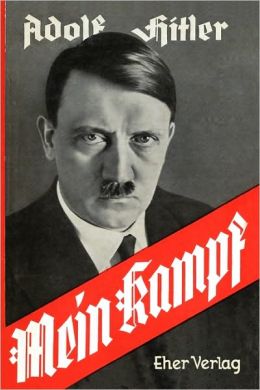
Hitler’s Mein Kampf is one of the most notorious works of the twentieth century. It is generally recognised as being the blueprint for the atrocities committed by the Nazi regime between 1933 and 1945. It is however rarely seen in its correct context as a piece of eugenic literature in the same tradition as Marie Stopes’ Radiant Motherhood, H.G Wells’ A Modern Utopia and Margaret Sanger’s The Pivot of Civilisation. In this series of posts I wish to focus attention on the eugenic principles which not only inform the whole work but which are in fact its ultimate foundation.

The inspiration behind Mein Kampf was Darwin’s theory of evolution by natural selection. Hitler saw races and nations as governed by the law of ‘the survival of the fittest’. Weak races deserved to be outcompeted and subjected to the will of stronger races. This sense of perpetual competition surely informs the title of the book, ‘Mein Kampf’, which means ‘My Struggle.’ Hitler begins his account by outlining how his own life began as a struggle against the overbearing will of his father. Hitler’s attempt to pursue a career as an artist ended in failure and with Hitler eking out a living, homeless, on the streets of Vienna. He was saved from being a victim of natural selection himself by the outbreak of the First World War which provided him with a cause to fight for. The defeat of Germany in November 1918 was a shattering emotional blow and Hitler, like many of his contempories, found solace in the view that Germany had not really been defeated on the battlefield but had rather been betrayed by politicians at home. In the immediate aftermath of defeat Germany was racked by revolution and counter-revolution as Communist uprisings took place across the nation. Hitler was present in Munich during the Bolshevik revolution of 1919 and for him it was a moment of political awakening. He became involved in an extreme fringe of German political life which merged a desire for radical social change with extreme nationalism, often with overt assertions of racial superiority. Anti-Jewish feeling was common among such groups because of the prominent Jewish involvement in the left-wing revolutionary movement as well as older associations of Jews with wealth and capital. The National Socialist ideology, which combined hostility to Communists and Jews with the Darwinian theory of evolution, was appealing to many because it provided a supposedly scientific justification for strong actions to restore German power and punish internal and external enemies.

Hitler’s belief in German superiority had its origins in his Austrian childhood which was marked by assertions by German Austrians of their identity in the multi-ethnic Austro-Hungarian Empire. He had however at one time considered himself hostile to anti-Semitism and in one remarkable passage he describes his earlier disgust at anti-Jewish rhetoric and his horror at the possibility of violence against the Jews. In Mein Kampf  he explains that his views changed after discovering the prominent role of Jews in the Social Democratic movement, which he detested, and their role in socialist and Marxist movements in general as well as in immoral industries such as prostitution. These feelings hardened during the post-war revolutionary period because many of the revolutionary leaders were Jewish. These reasons however are not sufficient to account for the full horror of the persecution and genocide unleashed under the Third Reich. The Nazi regime did not seek out Jews who were political opponents but rather all people of Jewish ancestry whatever their religious beliefs, political views, or social status. This was the result of Hitler’s conviction that the Jewish people were racially different, sub-human, and along with other groups such as Roma and Sinti gypsies in need of extermination. Hitler was not the creator of this ideology; he was simply a student of the international eugenics movement. 

To be continued...

Learn more about the founders of 'scientific racism':


Help fight eugenics today:


Wednesday, 22 May 2013

Baby on board

If you live in London, or just read the news now and again, you would have heard about the Transport for London "baby on Board" badges that pregnant mums are wearing on the lapels of their coats. Here's a few pictures and how to get one for yourself or a friend.


Thursday, 16 May 2013

27,500 chances to help unborn children

In September 2011 SPUC had 400,000 "Abortion: your right to know" leaflets printed. 

SPUC now has 27,500 of these leaflets left.

That's 27,500 chances for you to help unborn children.

2015 will mark the 50th anniversary of the passing of the Abortion Act. If the current abortion rate continues, 9 million unborn children will have been aborted. SPUC is working towards the complete rejection of abortion by society. One of the ways we will do this is by taking the pro-life message to the people via leafleting. You can see the leaflet below.

Last year there was a total of 208,553 unborn children aborted in Great Britain which is more than:
  • the entire university student population of Wales (131, 185)
  • the entire student populations of Oxford, Cambridge, Durham, Imperial College London, University College London, Warwick, Bristol, King's College London, Exeter, London School of Economics, and Royal Veterinary College combined. (statistics taken from the Higher Education Statistics Authority)
If that bothers you, then please order a batch of leaflets and distribute them in your area. 

Email your name, postal address, and number of leaflets to danielblackman@spuc.org.uk 
 

Wednesday, 8 May 2013

Fantastic day with students at Oxford Brookes pro-life society


The newly created pro-life society at Oxford Brookes University has distinguished itself by combining, right from the start, a healthy balance of educational talks and pro-life activism.

When student groups hold talks, interested students will come to hear the pro-life message. These talks are a good way of educating the members of a pro-life society, as well as providing an opportunity for people to challenge ideas. Talks allow for Q&A, discussion, debate, the opportunity to meet other like-minded students, as well as socialise. 

The benefit of outreach, namely leafleting, is that you don't wait for people to come and hear the pro-life message; instead you take the message directly to them. Universities have tens of thousands of students, and an activity like leafleting is a simple and effective way of getting something pro-life into students hands. A well crafted leaflet can engage the mind and the heart, give people helplines, factual information, raise questions, and direct the reader to online resources. Political parties, local restaurants and take-aways, businesses, and charities all use leafleting as a method of getting their message across and putting themselves on peoples radars. Another inspirational example is the White Rose Movement, who were a group of university students in Germany under the Nazi government. They wrote, printed, and distributed thousands of leaflets denouncing the injustices carried out by the Nazi government. This bold witness lead to their trial and swift executions. Their legacy lives on decades later as an example to us.

So, a group from Oxford Brookes - Genevieve, Max, Elsa, and myself from SPUC - spent an afternoon leafleting last week. Around 1000 homes were reached with a SPUC 9 Million Children leaflet, which details the development of the unborn child, the effects of abortion upon women, and helplines for those facing an unexpected pregnancy or are post-abortive. We stopped off for a nice lunch in a local pub, then did a bit more leafleting afterwards.

Later in the evening around fifteen of us headed to the student union building where I gave a pro-life presentation on unborn children and the right to life. There were some good questions and the pro-life society committee felt the evening went well and generated lots of new members who want to be actively pro-life in their university and local city. It was really nice to meet the students and they made me feel very welcome.

I am very grateful to have been invited to join them for the day. It is clear that getting a balance between educational talks and outreach is the way forward for student societies. These activities together will ensure that the society grows and continues year after year, building on the commitment of students, and ensures that as many people as possible hear the pro-life message. Students, be ambitious, aim high.

If you're a student or young adult and want to hold a talk and get involved in leafleting outreach, please email me. There are nearly 63 million people in the UK, we need to show each of them that the unborn child is a human person with the right to life. We need to show each of them that abortion is wrong and never a solution. The need is urgent. 

danielblackman@spuc.org.uk

Friday, 3 May 2013

Utilitarianism isn't useful

Richard Doerflinger
An interesting article by John Jalsevac appeared recently on Life Site News reporting on an address delivered by Richard Doerflinger, Associate Director of the Pro-Life Secretariat at the United States Conference of Catholic Bishops, to the annual General Assembly of the Pontifical Academy for Life. 

Scientists who profess utilitarianism (which can be summed up in Bentham’s phrase “it is the greatest happiness of the greatest number that is the measure of right and wrong.”) often accuse those who oppose unethical practices, such as embryonic stem cell research, of standing in the way of scientific progress. Doerflinger argues that it is in fact the disregard shown by many scientists to moral norms that has impeded progress. For example, many pressed ahead with embryonic stem cell research as a way of ‘pushing boundaries’ despite indications that adult stem cells in fact offered the best possibilities for new treatments. Ideology triumphed over good science.

Doerflinger’s address reminds us that pursuing the moral good will always lead to progress in all areas of life while doing evil that good may come of it will only ever end in greater evils.

Thursday, 2 May 2013

"Stop harassing women"? Study examines impact of pro-life activity outside abortion premises


Those who criticise pro-life groups for holding public acts of witness outside abortion facilities will often claim that these vigils harass, scare, and intimidate mothers who enter and leave abortion facilities. This criticism comes from abortion "charities" like BPAS, Marie Stopes International, university and local feminist groups, mainstream media, and individuals on Twitter, Facebook, and blogs.

Groups criticised by those supporting abortion include 40 Days for Life, the Good Counsel Network, the Helpers of God's Precious Infants, Abort67, and SPUC coordinated annual pro-life chains. This list is not intended as a SPUC endorsement of the groups listed, rather to recognise the groups who are very often criticised. Occasionally an anonymous anecdote or a quote is presented as evidence that pro-lifers are there to harass mothers outside of abortion facilities. 

However, rarely if ever is something more substantial cited, such as a study that attempts to seriously consider the experiences of mothers and pro-life vigils outside of abortion facilities. There are a few studies that are not well known.

The most recent study is by Diana Greene Foster et al, "Effect of abortion protesters on women's emotional response to abortion", Contraception 87 (2013) 81-87. Here is the abstract which briefly summarises the study:
Abstract
Background: Little is known about women's experiences with and reactions to protesters and how protesters affect women's emotional responses to abortion.
Study Design: We interviewed 956 women seeking abortion between 2008 and 2010 at 30 US abortion care facilities and informants from 27 of these facilities.
Results: Most facilities reported a regular protester presence; one third identified protesters as aggressive towards patients. Nearly half (46%) of women interviewed saw protesters; of those, 25% reported being a little upset, and 16% reported being quite a lot or extremelyy upset. Women who had difficulty deciding to abort had higher odds of reporting being upset by protesters. In multivariable models, exposure to protesters was not associated with differences in emotions 1 week after the abortion. Conclusion: Protesters do upset some women seeking abortion services. However, exposure to protesters does not seem to have an effect on women's emotions about the abortion 1 week later.
This study notes that "although researchers and advocates have reason to believe that abortion protesters affect women's experience of abortion, little research has comprehensively documented women's experience of protester interactions". It is useful in some ways, but first let's list a few of the problems.

First, the researchers label pro-life vigils as "protests" and the people as "protesters". This is unhelpful, because in our society the word "protest" summons up images of shouting crowds marching through the street, conflict with police, arrests, aggression and so on. The use of the word "protester" can also be a biasing factor in the design of the study. Questions asked to abortion staff and mothers using the word protester can influence the way the participant views the question and affects the answer given, even to the point of giving the sort of answer they think the researchers expect to hear.

Second, the different types of pro-life vigil are labelled as passive (praying quietly at a distance), aggressive (shouting at women, attempting to hand out literature), or mixed (both passive and aggressive). It seems like a stretch of the imagination to label handing out a leaflet as an aggressive act. Is it possible that there have been times when someone who is part of a vigil shouts? Yes, peoples feelings can run high and saying something back to a passer-by who just swore at you might feel justified at the time, particularly if the person has little or no experience of how to behave at appropriately at a vigil. This is why groups like 40 Days for Life and Good Counsel Network insist that vigil participants sign a statement of peace - a short code of conduct participants should follow. Often passers-by will shout abusive comments at pro-lifers. Sometimes, but less often, banners, placards, and displays are kicked, broken and stolen by passers-by. A mother walking into an abortion facility may well mistake a passer-by and an pro-lifer having an altercation as aimed at her in someway.

Third, the study cites the American Psychological Association (APA) task force report on mental health and abortion report 2008 and the 2011 Munk-Olsen study on induced abortion and risk of mental disorder. These studies are cited to support the paper's claim that the vast majority of women report positive emotional outcomes after their abortion, and poor mental health after abortion due to poor mental health before the abortion. However, these claims and the studies used to support them cannot be taken at face value. The American Association of Pro-Life Obstetricians and Gynaecologists published an extensive critique of the APA report in September 2008. Professor David Fergusson, atheist and self-described "pro-choicer" and one of the international leading experts on abortion and mental health, criticised the APA 2008 report in August of that year.
The APA report, in fact, does draw a very strong and dogmatic conclusion that cannot be defended on the basis of evidence since this evidence is lacking by the admission of the report. As I stated to the APA committee in my review [of an earlier draft], the only scientifically defensible position to take is that the evidence in the area is inconsistent and contested. Under these conditions the only scientifically defensible conclusion is to recognise the uncertainty in the evidence and propose better research and greater investments in this area. What the Committee has, in effect, said is that until there is compelling evidence to the contrary, people should act as though abortion has no harmful effects. This is not a defensible position in a situation in which there is evidence pointing in the direction of harmful effects. In this respect, the response of the APA committee to this situation appears to follow the type of logic used by the Tobacco industry to defend cigarettes: since, in our opinion, there is no conclusive evidence of harm then the product may be treated as safe. A better logic is that used by the critics of the industry: since there is suggestive evidence of harmful effects it behooves us to err on the side of caution and commission more and better research before drawing strong conclusions. History showed which side had the better arguments.
What I also think the APA committee has failed to recognise is the size of the research investment needed to pin these issues down thoroughly. The tobacco example is a clear one: there have been literally tens of thousands of studies in this area (I have in fact published over 10 papers on tobacco related topics). This amount of research is needed in an area in which there are strongly divided opinions and deeply rooted agendas. The moral of all of this is very simple: In science drawing strong conclusions on the basis of weak evidence is bad practice. The APA report on abortion and mental health falls into this error.
Furthermore, Professor Priscilla Coleman, another international expert and one of the most published academics on abortion and mental health, has listed six considerable criticisms of the Munk-Olsen study, and points out that data from this study, despite evident problems,
does indicate increased rates of particular diagnoses at specific points in the first year. Relative risk for psychiatric visits involving neurotic, stress-related, or somatoform disorders was 47% and 37% higher post-abortion compared to pre-abortion at 2 and 3 months respectively.  In addition, psychiatric contact for personality or behavioral disorders was 56%, 45%, 31%, and 55% higher at 3, 4-6, 7-9, and 10-12 months respectively.
Having briefly covered the obvious problems with this study, there are also useful points from the perspective of those who carry out public pro-life work outside abortion facilities.

First the Foster et al study cites the Cozzarelli and Major 2000 study which examined the experience of mothers who had interacted with pro-lifers outside of three different abortion facilities in New York. This study has many of the problems mentioned above. However, Foster et al conclude from this study that for some women "negative effects of protester interaction did not extend beyond the short term." In both the Foster, and Cozzarelli and Major studies, it seems the mother's thoughts and feelings about the abortion influence how she perceives pro-lifers outside of an abortion facility.

Second, this study found the following:
"Among women who saw, heard or were stopped by protesters, 48% said that the protesters did not upset them at all, 25% said they were a little bit upset, 12% reported being moderately upset, 9% reported being quite a bit upset, and 7% were extremely upset"

"women who reported more difficulty making the decision to have the abortion reported being more upset than women reporting less difficult"

"Among the 712 women in the study who received an abortion and replied to both the emotions and protester questions, we found no association between emotions about the abortion — regret, relief, guilt, happiness, sadness or anger — and the level of exposure to protesters."

"the presence and intensity of the protester interaction had no effect on women's emotional response to their abortion (relief, regret, anger, happiness, sadness or guilt) 1 week after the abortion"
Third, this study notes that if pro-lifers deterred some mothers from entering an abortion facility they would not appear in this study. Some mothers would have had an interaction with pro-lifers and decided not to have an abortion. These mothers are therefore not recorded. If they were included we'd be looking at mothers who could describe their experience with pro-lifers as good and positive. From pro-lifers they have received moral and emotional support, perhaps a place to stay, financial help, advice and so on. Perhaps a mother going to an abortion facility didn't want to have the abortion in the first place and just needed a word of encouragement, even some sort of sign that would reassure them. It's possible that a pro-life counsellor outside an abortion facility will be the first person not to tell them that they must have an abortion. The researchers could have gone to pro-life pregnancy centres and homes and conducted the same interviews with mothers who had some sort of positive interaction with pro-lifers outside an abortion facility and asked them to answer the questionnaire.

Several pro-life groups provid moral and practical assistance to parents in need. Some make pro-life vigils part of their work, others don't. One pro-life pregnancy centre in the South, Good Counsel Network, does a good job of recording the number of mothers whom they meet on the doorstep of a BPAS or Marie Stopes International abortion facility, but get the help they need and give birth. Last year this pro-life centre recorded 95 such mothers they supported through the rest of their pregnancy. However, there are also many more who prefer not to stay in touch - they had the short term support they needed, sometimes their difficult circumstances change for the better, a boyfriend has a change of heart, and off they go. Sometimes mothers will lose touch and it remains unclear what happens after. The experience of mothers who have a positive experience should be heard and not dismissed by pro-abortion advocates because these mothers, and the support of pro-lifers, do not fit into the distortions they insist on spreading.



Friday, 19 April 2013

The origins of the eugenics movement in Germany

The eugenics movement in Germany drew on the same primary inspiration as its sister movements in Britain and the United States, namely, the writings of Charles Darwin. In this post I wish to continue our series on eugenics by presenting profiles of just a few of the many individuals who helped to shape the first decades of the German eugenics movement.

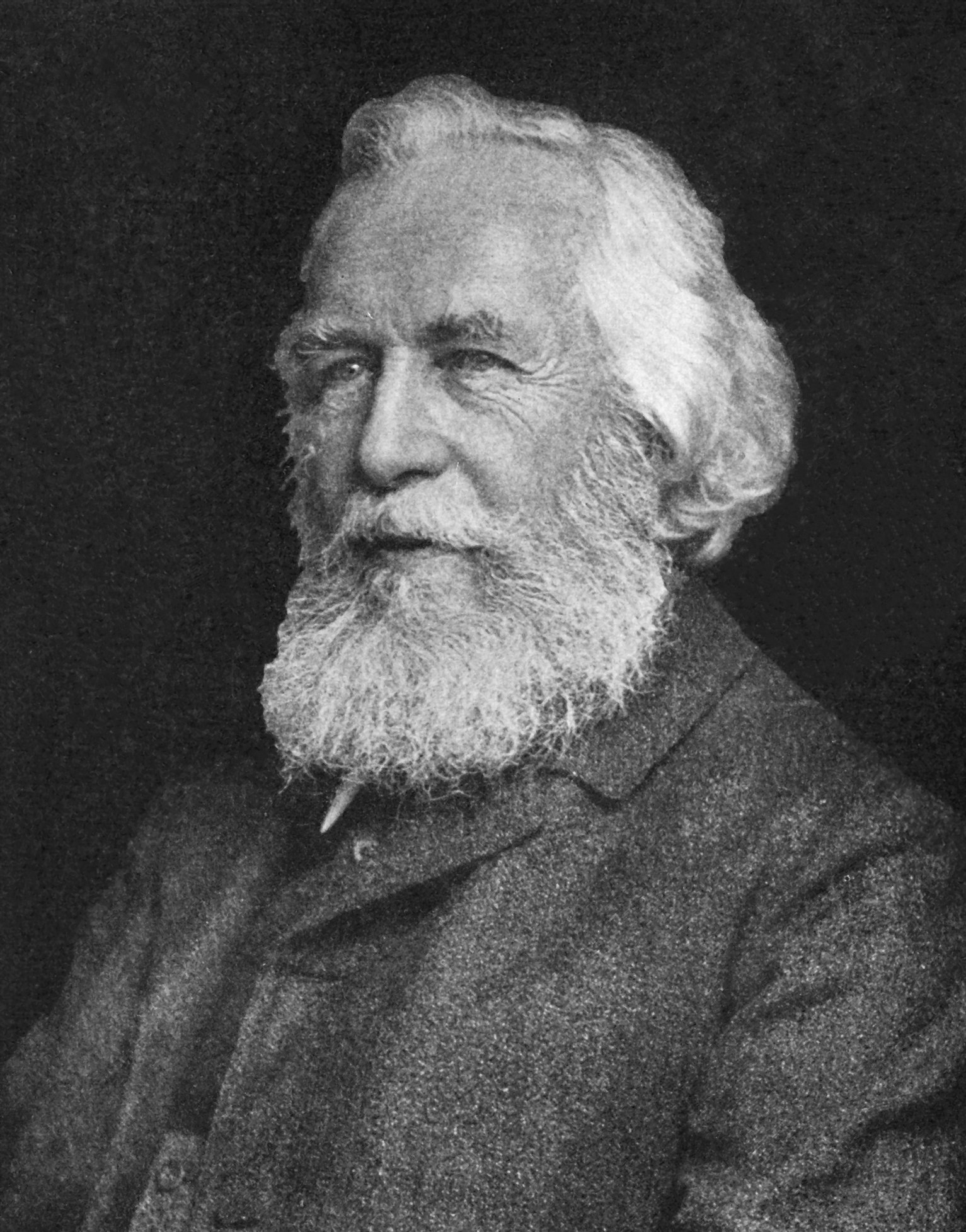
Ernst Haeckel

Ernst Haeckel (1834 - 1919)
Ernst Haeckel, a biologist who had visited Charles Darwin and Thomas Huxley in 1866, first introduced their work to a wide German audience. Haeckel can, along with Darwin and Galton, be considered one of the founders of ‘scientific racism’. He considered that “the Caucasian, or Mediterranean man, has from time immemorial been placed at the head of all the races of men, as the most highly developed and perfect.” Haeckel taught at the University of Jena for forty-seven years from 1862 to 1909 and during this time he worked ceaselessly to propagate both the theory of evolution and the racial ideology which had become almost inseparable from it. One of his lasting legacies was a series of drawings of embryos from different species which purported to demonstrate their gradual evolution. His drawings are no longer considered as being of any scientific value; indeed they are widely considered to have been deliberately doctored, even faked, in order to prove his pre-existing theories. The most influential of Haeckel’s forty-two published works was The History of Creation (1868) in which he set out the theory of evolution for his German audience with his own reflections on the development of the human race. Typical of his views are his statements that inhabitants of southern Africa are ‘more like apes’ than any other race of human beings and that ‘no woolly-haired nation has ever had an important “history”’.[1] Haeckel shared Charles Darwin’s view that the ‘lower races’ were doomed to extinction. [2] There would soon be those in Germany who would attempt to accelerate this supposed evolutionary process.

Alfred Ploetz

Alfred Ploetz  (1860 - 1940)
One of the most poisonous fruits of Haeckel’s legacy was the Freie wissenschaftliche Vereinigung (free scientific union) a radical group who studied and discussed the writings of both Haeckel and Darwin. They wanted to found an ideal society on a pacific island and organise it along eugenic principles. A leading member was Alfred Ploetz who coined the term Rassenhygiene, literally ‘Racial Hygiene’, which has essentially the same meaning as the word ‘eugenics’. In 1895 he published Outline of Racial Hygiene and followed this with The Efficiency of our Race and the Protection of the Weak in which he advocated large scale abortion, infanticide and the rigorous control of human reproduction by the state. In 1904 he founded the journal Archive for Racial and Social Biology and in 1905 the German Society for Racial Hygiene. He was praised by the Nazi eugenicist Ernst Rudin as a man who ‘by his meritorious services has helped to set up our Nazi ideology’. Like many other supporters of brutal population control policies, such as Nelson Mandela and Barack Obama, he was awarded the Nobel Peace Prize. He received this award in 1936, the year after the notorious Nuremberg Laws were instituted. Early in his career he was considered pro-Jewish and praised the intellectual abilities of the Jews; he was later to bring his views into line with those of the Nazi regime.

Eugen Fischer

Eugen Fischer (1874 - 1967)
Eugen Fischer was one of the leading figures of the early German eugenic and Darwinist movement. In 1908 Fischer conducted a research project on people of mixed-race in German South West Africa and concluded that intermarriage between races should be forbidden. On his return to Germany he founded the Society for Eugenics in Freiburg. Throughout this period he worked closely with Charles Davenport and the International Federation of Eugenics Organisations. In 1927 he became head of the Kaiser Wilhem Institute of Anthropology, Human Heredity and Eugenics, which position he held until 1942.  In 1933, the year Hitler rose to power, he was appointed Rector of the Frederick William University of Berlin and later joined the Nazi party. He was an enthusiastic advocate of sterilisation and birth control and was responsible for the forced sterilisation of mixed race children in the Rhineland (the children of European women and African soldiers in the occupying French army). After the Second World War, his career continued seemingly unblemished by his cooperation with the Nazi regime. He was one of the many beneficiaries (along with International Planned Parenthood) of the policy of turning a blind eye to those implicated in Nazi eugenics, in order to aid German recovery. He was made an honorary member of the German Anthropological Society in 1952.

Ernst Rudin

Ernst Rudin (1874 - 1952)
Ernst Rudin was introduced to Darwinism and the ideology of eugenics by his brother-in-law Alfred Ploetz. He began his career by studying the genetic origins of mental illnesses. From 1917 – 1945 he was Director of the Genealogical-Demographic Department at the German Institute for Psychiatric Research in Munich. He was also to be become the head of the Max Planck Institute for Brain Research and the German Society for Racial Hygiene. In 1933, shortly after Hitler seized power, Rudin, along with other leading eugenicists sat on the Expert Committee on Questions of Population and Racial Policy which advised Hitler on matters relating to eugenics. Rudin authored the official commentary on the ‘Law for the prevention of hereditarily diseased offspring.’ He was arrested in 1945 but was released swiftly.

These brief portraits should be enough to make clear that the Nazi programme of genocide, euthanasia and sterilisation was not the isolated work of a rogue regime but was simply, at that date, the most bloodthirsty of attempts to implement the eugenic ideology that had been growing in strength for nearly a century. After the Second World War the advocates of eugenics regrouped and found new ways of propagating and implementing their ideology. Abortion has proved to be the simplest way of securing ‘racial hygiene’, for example, around 90% of infants diagnosed with Down’s Syndrome are now killed in the womb.

We are all called to do our part in the struggle for human life and dignity in the face of the almost overwhelming power of the eugenics movement.

Help defeat eugenics today:

-         Join SPUC 
-         Learn how you can take part in our campaigns 
-         Learn more about eugenics


[1] Ernst Haeckel, The History of Creation: Volume II (1880 ed., New York), p307
[2] In The Descent of Man Darwin had written “Civilized races of man will almost certainly exterminate the savage races throughout the world ... The break between man and his nearest allies will then be wider, for it will intervene between man in a more civilized state, as we may hope, even than the Caucasian, and some ape as low as a baboon, instead of as now between the negro or Australian and the gorilla.”
Related Posts Plugin for WordPress, Blogger...